
LOM Law: How can you bring your crosswalks into compliance by December 31, 2026 ?
In France, safety around crosswalks remains a constant concern for road authorities. According to the ONISR survey from May 2026, 503 pedestrians died in metropolitan France over the past twelve months. This represents a 9% increase compared to June 2024-May 2025. It also marks a 4% increase compared to 2019.
Indeed, drivers must be able to see a pedestrian stepping onto a crosswalk early enough to stop in time. This is precisely what Article 52 of the Mobility Orientation Law (LOM) aims to ensure. Therefore, local authorities must eliminate motor vehicle parking near crosswalks by the end of 2026.
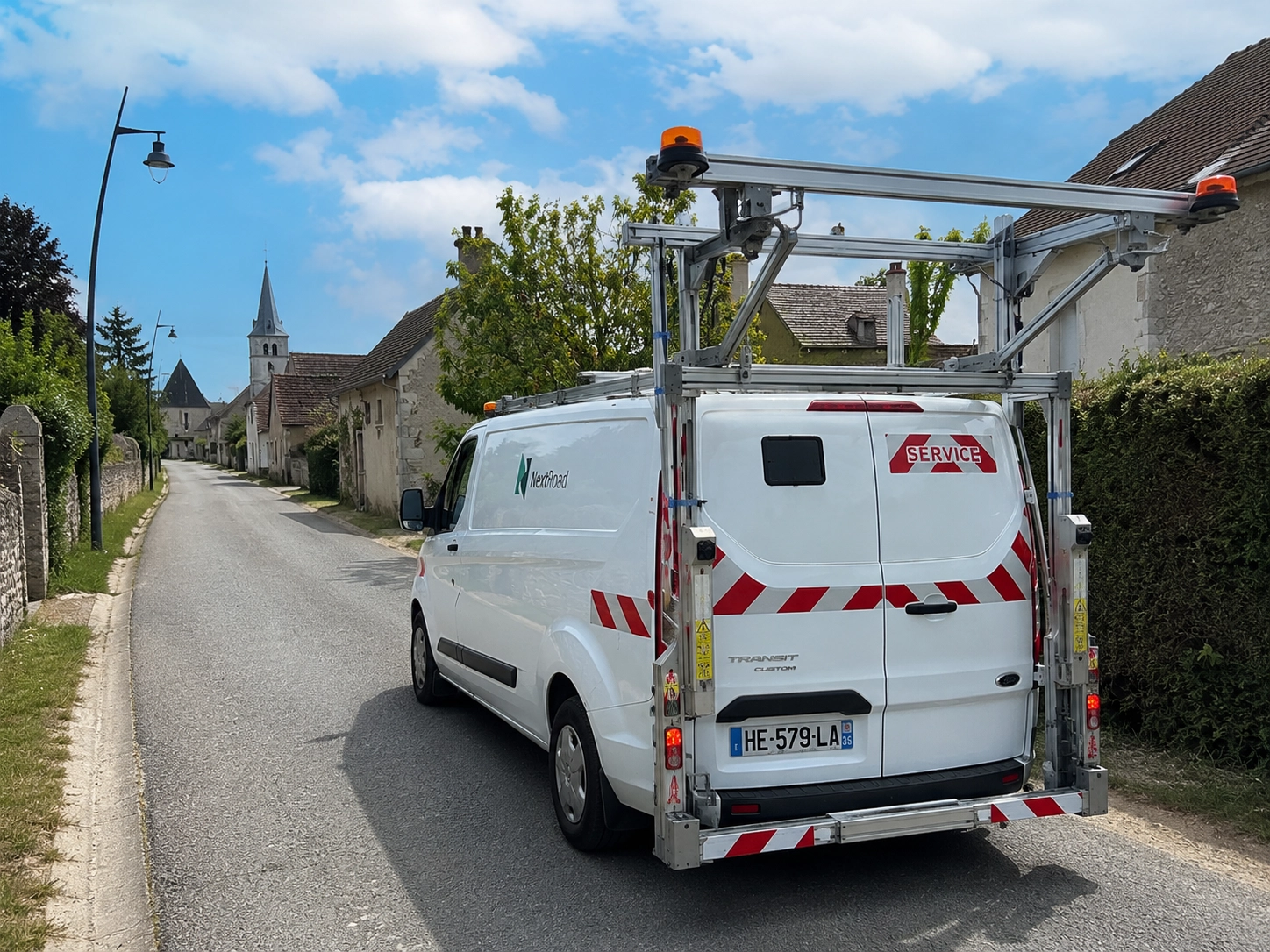
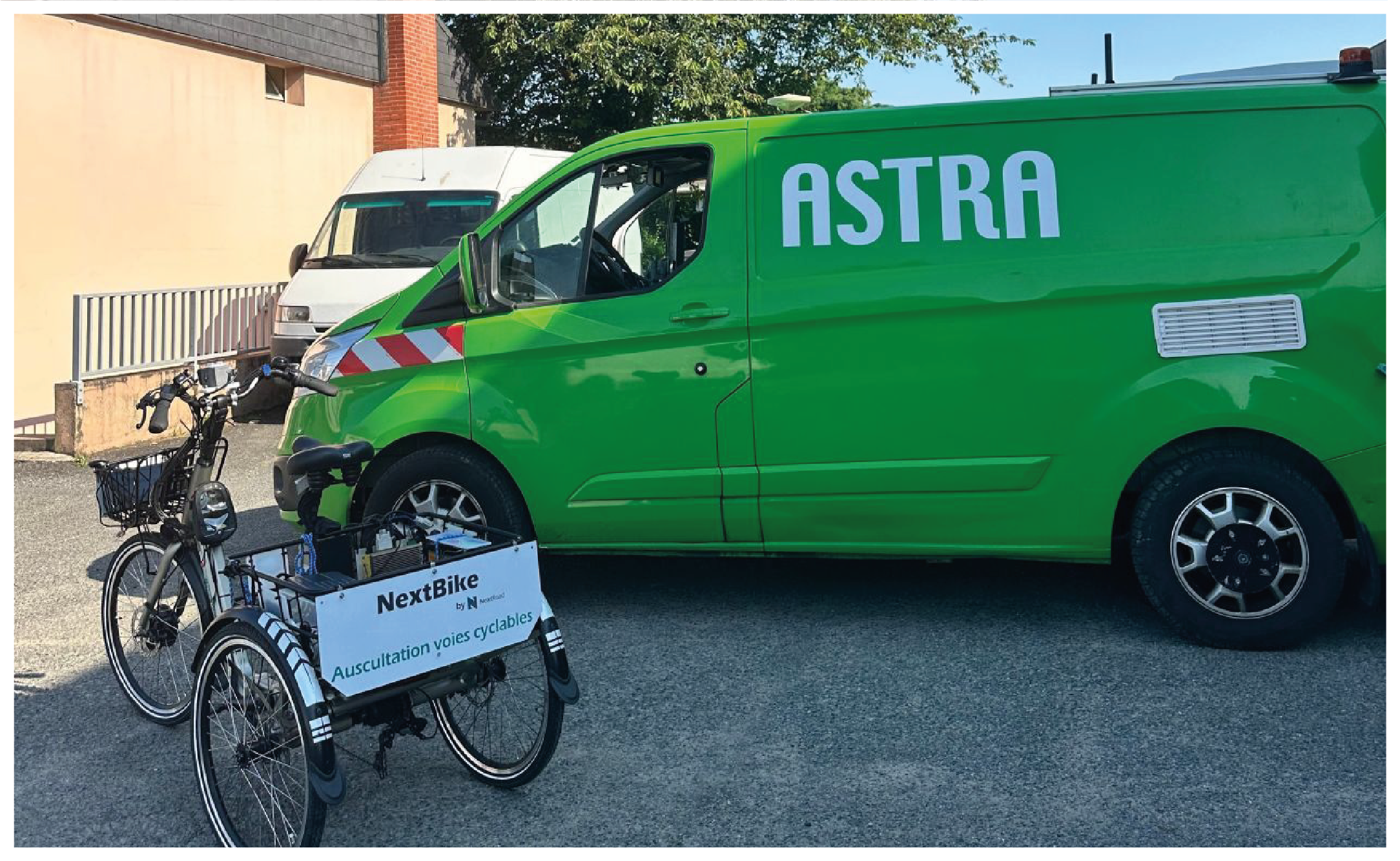
At NextRoad, we assist local governments and road authorities in analyzing their infrastructure. We help them identify the affected areas and achieve compliance under optimal technical and budgetary conditions.
What does the LOM require in terms of compliance?
Law No. 2019-1428 of December 24, 2019, on mobility policy, introduced a new obligation for road authorities. Specifically, Article 52 requires excellent mutual visibility between pedestrians and drivers when approaching crosswalks.
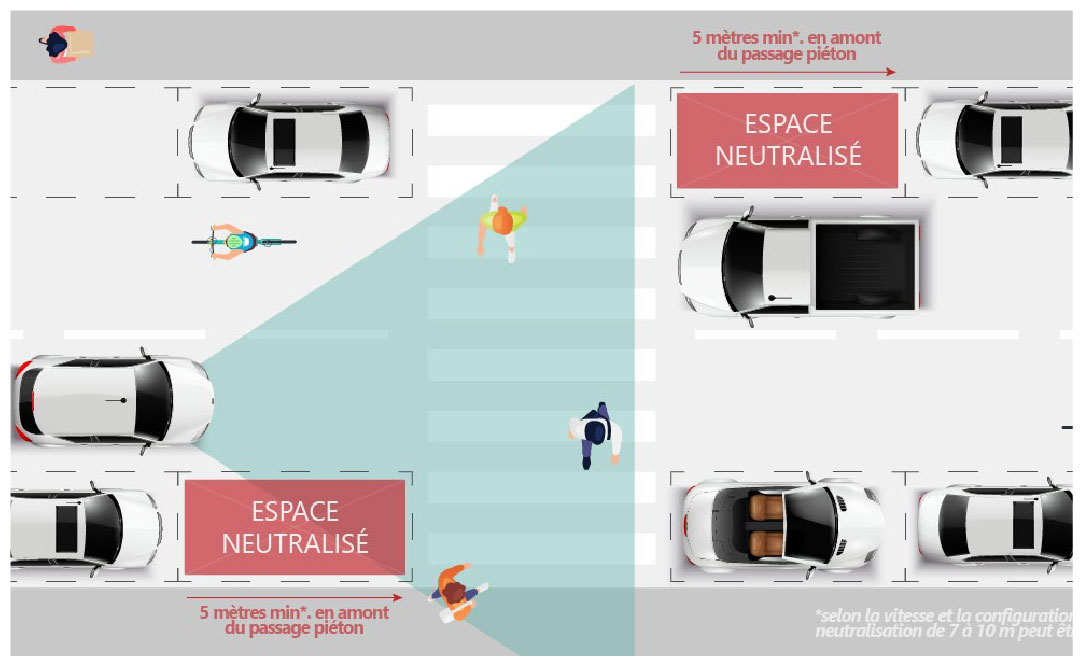
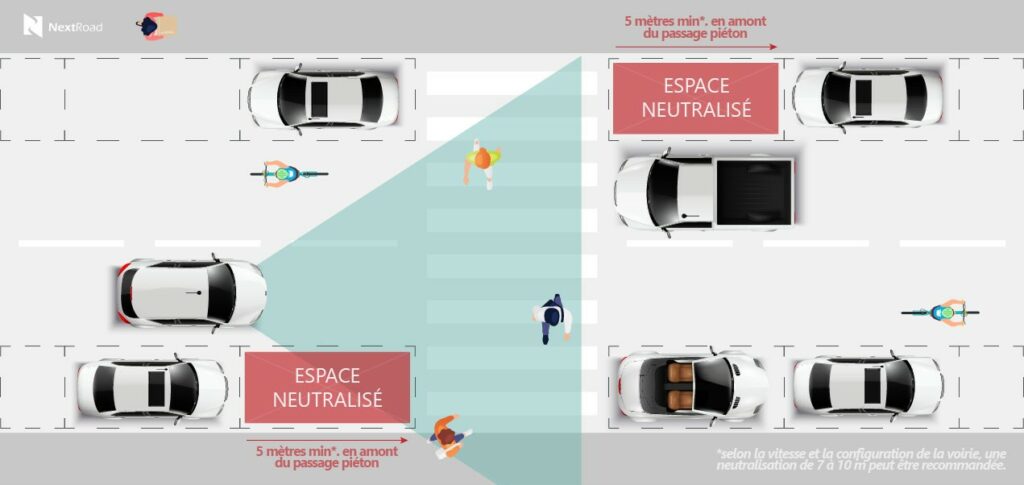
Specifically, this article created Article L.118-5-1 of the Highway Code. It now prohibits motor vehicle parking within 5 meters upstream of a crosswalk. However, spaces reserved for bicycles or personal mobility devices remain allowed.
Furthermore, this requirement applies during road construction, rehabilitation, or repair work.Therefore, compliance work must be completed by December 31, 2026.
So, why does the LOM Act require the elimination of parking in front of crosswalks?
Obstructed visibility: A well-documented cause of accidents
A vehicle parked immediately before a crosswalk can obstruct the driver’s view. In such cases, the driver spots the pedestrian too late. This risk is even higher for children or people in wheelchairs. As a result, the driver no longer has enough time to stop. Road safety experts have long identified this phenomenon as one of the major causes of accidents involving pedestrians crossing the street.
The 5-meter distance corresponds to the average size of a parking space. It is the minimum required to restore a sufficient visibility triangle. This triangle improves visibility between the approaching driver and the pedestrian waiting to cross.
A minimum distance, to be adapted to the context
However, five meters is the legal threshold. However, it is not necessarily sufficient in all situations. Road configuration and prevailing speeds may warrant a greater distance. In some cases, it is preferable to prohibit parking for 7 or even 10 meters.
How can you bring your crosswalks into compliance with the LOM Act?
First, compliance isn’t limited to simply removing a few parking spaces. It requires an initial assessment to:
- Identify all crosswalks in the relevant network.
- Identify those with non-compliant parking within 5 meters.
- Classify situations based on risk level (proximity to a school, typical speed, road configuration).
- Determine the most appropriate design solution for each location.
At NextRoad, we conduct on-site road safety audits and assessments: photographic and video surveys, analysis of visibility and site conditions, and identification of non-compliance issues at crosswalks. We also provide design recommendations tailored to each site’s layout and the local government’s operational constraints.
Our goal is to transform this regulatory requirement into a clear action plan. This plan is prioritized according to the actual level of risk. It can then be used directly by technical departments and elected officials.
Finally, how should the removed crosswalks be redesigned?
For some municipalities, the number of parking spaces affected may be significant. This is particularly the case in downtown areas, shopping streets, and areas near schools. It also applies to dense residential zones or areas already subject to space constraints.
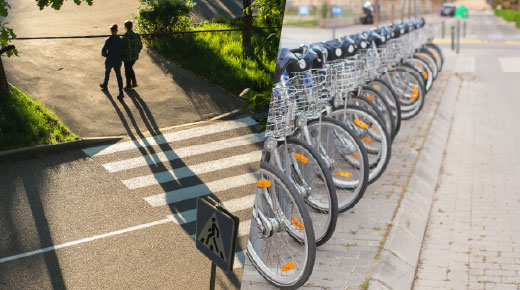
But this change can also serve as a catalyst for improving the quality of life. The freed-up spaces can be repurposed for uses that do not obstruct visibility:
- For example, bicycle racks
- Parking for bicycles and personal mobility devices
- Low-growing vegetation
- Sidewalk extensions
- More clearly defined waiting areas for pedestrians
- Appropriate street furniture, provided it does not obstruct visibility
Therefore, the issue of parking isn’t going away—it’s shifting. It calls on local governments to organize road use more carefully, taking into account the needs of residents, businesses, delivery services, people with limited mobility, and active transportation modes.
In conclusion
In conclusion, bringing crosswalks into compliance with the LOM is not merely an administrative requirement: it is a road safety measure that addresses a well-documented pattern of accidents. Planning ahead for this deadline as part of your roadwork projects allows you to address this requirement methodically rather than under pressure, and to turn it into a real opportunity to improve safety for all road users.